 |
September 13, 2026 |
Resources |

No m

|
September 13, 2026 |
Resources |
No m
 |
September 6, 2026 |
Resources Sermon Notes |
No m
 |
August 30, 2026 |
Resources Sermon Notes |
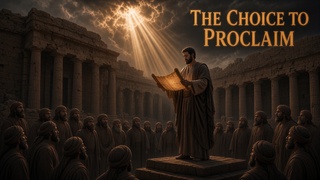
No matter how dark the times, steady faithfulness to God makes an impact. The message opens with Sir Christopher Wren asking stone cutters what they are doing. One sees a task. One sees wages. One sees a cathedral where people will worship God for centuries. That question leads to Baruch, Jeremiah’s scribe, who lives through the dark last years of Judah and the destruction of Jerusalem and the temple.
In Jeremiah 32 Baruch handles the deed of a field bought while Babylon surrounds the city—an act of faith that declares houses, fields, and vineyards will be bought again. In Jeremiah 36 he writes, reads, and rewrites God’s Word after King Jehoiakim burns the scroll. In Jeremiah 43 he is accused and forced toward Egypt when leaders reject the Lord’s command. In Jeremiah 45 God meets his weariness: do not seek great things for yourself; wherever you go, I will let you escape with your life.
Baruch never stands in the spotlight, yet his quiet, costly faithfulness helps proclaim a hard and hope-filled word. The message invites hearers to tell Jesus the truth about weariness, lower the demand for great things, take the next small step of service, and find their place in God’s big story.
 |
August 23, 2026 |
Resources Sermon Notes |
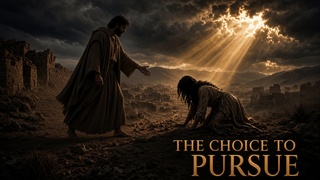
God’s loving-kindness pursues unfaithful people paying the price to bring them home. The message opens with the questions people are almost afraid to ask: Can I ever come back? Can God love someone like me? Has God given up? Have I gone too far this time? Those questions belong both to those who have never turned to God and to those who once followed Jesus and wandered away. God answers not with a slogan but with a living parable. He calls Hosea to marry Gomer, to name children Judgment, No Mercy, and Not My People, and then—after a courtroom listing of Israel’s sins—to allure her, speak tenderly, and buy her back. Hesed is love that will not walk away.
That pursuit reaches its fullness when Jesus, the Son of David, is lifted up and draws all people to Himself. Romans 5:8 makes it plain: while we were still sinners, Christ died for us. Ephesians 5 shows why—He gave Himself to make His people holy, radiant, without stain. Followers of Jesus are called to take a costly step toward someone they have written off. Wanderers are invited to stop running from the One who has pursued them all their lives.
 |
August 16, 2026 |
Resources Sermon Notes |
When circumstances scream “Flee,” the wise remain loyal to their king. In 2 Samuel 15, as David flees Absalom’s rebellion, the Philistine commander Ittai the Gittite faces a classic pressure point. David offers him an easy exit: “Go back… this is not your fight.” Instead Ittai answers, “As the Lord lives, and as my lord the king lives, wherever my lord the king shall be, whether for death or for life, there also will your servant be.” His loyalty to the living God and God’s king later earns him command of one-third of David’s army.
The sermon draws the parallel to Peter in John 6, when many disciples turned back from Jesus. Peter’s response—“Lord, to whom shall we go? You have the words of eternal life”—echoes Ittai’s settled resolve. Four truths emerge for every follower of Jesus: Your allegiance is to who or what you believe offers life; true allegiance is revealed the moment an easy exit appears; easy exits are always dangerous dead ends; and staying with the True King is public, costly, and rewarding.
 |
August 9, 2026 |
Resources Sermon Notes |
When circumstances scream “Flee,” the wise remain loyal to their king. In 2 Samuel 15, as David flees Absalom’s rebellion, the Philistine commander Ittai the Gittite faces a classic pressure point. David offers him an easy exit: “Go back… this is not your fight.” Instead Ittai answers, “As the Lord lives, and as my lord the king lives, wherever my lord the king shall be, whether for death or for life, there also will your servant be.” His loyalty to the living God and God’s king later earns him command of one-third of David’s army.
The sermon draws the parallel to Peter in John 6, when many disciples turned back from Jesus. Peter’s response—“Lord, to whom shall we go? You have the words of eternal life”—echoes Ittai’s settled resolve. Four truths emerge for every follower of Jesus: Your allegiance is to who or what you believe offers life; true allegiance is revealed the moment an easy exit appears; easy exits are always dangerous dead ends; and staying with the True King is public, costly, and rewarding.
 |
August 2, 2026 |
Resources Sermon Notes |
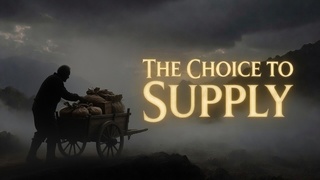
Even when all seems lost, God uses the costly choices of faithful people to advance His kingdom. David’s private sin produced public consequence; Absalom stole the hearts of Israel and the king fled Jerusalem barefoot and weeping. Shimei cursed and threw stones. Yet God had already promised an everlasting kingdom, and the promise kept advancing through quiet, costly faithfulness.
Eighty-year-old Barzillai of Gilead opened the wagons—beds, food, cheese—knowing that if Absalom won, everything he owned and his life itself were forfeit. When David returned in victory, Barzillai refused the honor of Jerusalem, asked only that Chimham go in his place, and went home content. The same pattern appears in Joanna, wife of Herod’s household manager, who risked status and resources to fund Jesus’ itinerant ministry.
Those who have tasted God’s hesed keep the supply lines open—even when it costs them everything. True faithfulness is revealed while the outcome is still in doubt.
 |
July 26, 2026 |
Resources Sermon Notes |
The message explores how we all face seasons when life overruns us and we need friends who can cry through a crisis.
The message opens with the gripping story of Lt. Col. Hal Moore in Vietnam’s Ia Drang Valley, where he called “Broken Arrow” — a desperate plea for help even if it meant bombing his own position. This illustrates our human need for connection in adversity.
Drawing from Proverbs 17:17 and 18:24, the message shows God’s design for friendship that shows up in hard times and sticks closer than a brother.
The ultimate “Broken Arrow” came when sin contaminated humanity, but God the Father sent Jesus to answer the call. On the cross, Jesus laid down His life for His friends, absorbing the full force of sin, death, and evil, and defeating them. Jesus calls us His friends if we trust and follow Him.
The message challenges us to build deep friendships empowered by our friendship with Jesus so others can cry “Broken Arrow” and find real help.